








Process Valves · 2/2-Way
Coaxial Valves – Fast-Switching 2/2-Way Process Valves
Coaxial valves switch reliably where conventional seat or diaphragm valves reach their limits: at high switching frequencies, difficult media and varying pressure conditions. As direct-acting 2/2-way process valves, they open and close along the axis of flow – the tube piston moves coaxially to the media flow. With the CSE01, CVT and CVF series, STASTO offers an extensive, field-proven range for both neutral and demanding media.
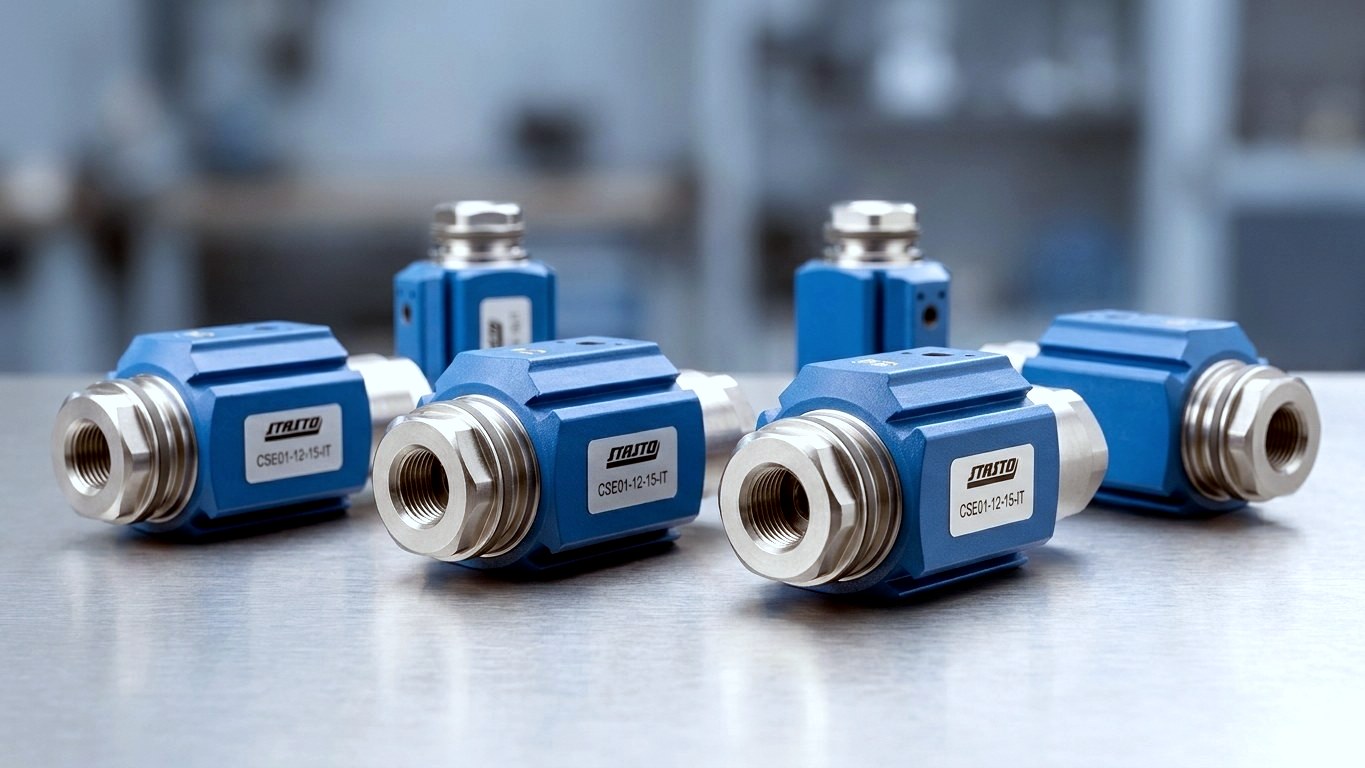
Series CSE01, CVT & CVF
Why coaxial valves
Directly switching, pressure-independent, robust
A coaxial valve is technically a direct-acting 2/2-way seat valve – with the difference that the sealing seat is located on the movable tube piston and travels coaxially with the flow. This results in characteristic advantages over many conventional valve designs.
Pressure-independent switching
The coaxial valve operates without a pilot membrane and without a minimum pressure differential, switching reliably even at 0 bar differential pressure – ideal for heavily fluctuating or absent inlet pressure.
Robust against difficult media
Thanks to the straight-through, coaxial flow path, the principle is also suitable – depending on the version – for contaminated or viscous media. We clarify specific media compatibility based on the respective datasheet.
Short switching times, high service life
The moving tube piston is compact and lightweight – enabling fast switching cycles and long service life in pulsing processes.
Wide range of series
From small port sizes of the CSE01 series to larger nominal diameters of the CVT and CVF solenoid valve series – a comprehensive range from a single source.
Product Series in Our Range
Coaxial Valves by Series and Actuation
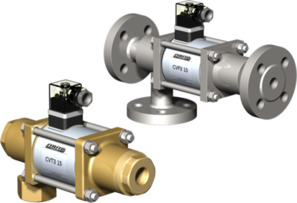
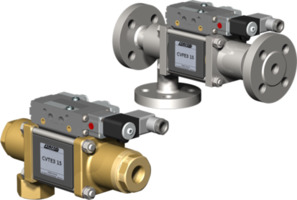
The STASTO range includes pneumatically and solenoid-operated coaxial valves in 2-way and 3-way configurations. Select the appropriate series for your actuation type and bore size.
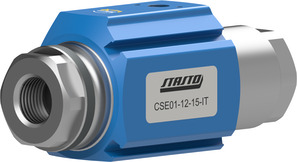
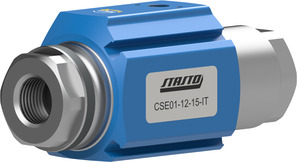
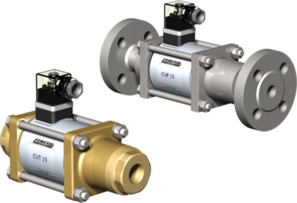
Technical Guide
Coaxial valve or seat valve?
A coaxial valve is technically a direct-acting 2/2-way seat valve – with the difference that the sealing seat is located on the coaxially moving tube piston. This results in clear advantages over many conventional seat or spool valves.
Design & operating principle
- Axial tube piston
- The cone seat is located on the movable piston, which travels along the axis of flow – hence "coaxial".
- Direct acting
- No pilot system, no control diaphragm – actuation acts directly on the piston.
- Full-bore flow path
- Minimises dead spaces and deposit surfaces, promoting media compatibility.
Advantages over the classic seat valve
- Pressure-independent switching
- Unlike pilot-operated solenoid valves, the coaxial valve requires no minimum differential pressure.
- Long service life
- Few moving parts and a guided piston reduce wear in cycling applications.
- Fast switching
- The lightweight tube piston enables short switching times and high cycle rates.
Actuation types compared
Pneumatic, Solenoid or Externally Controlled
The right actuation type depends on your control environment, nominal bore and switching function. The following overview categorises the main product series.
| CSE01 pneumatic | CVT / CVF solenoid | externally controlled | |
|---|---|---|---|
| Port function | 2/2-way | 2/2- and 3/2-way | 2/2- and 3/2-way |
| Actuation | Compressed air (AT / ZT) | Solenoid (electric) | external / pilot-operated |
| Nominal sizes | approx. DN10–DN25 | DN10–DN80 | depending on series |
| Typical series | CSE01, CSE02 | CVT-10…50, CVF-15…80 | CVTC, CVTM, CVTE, CVTB |
| No electrical components | yes | no | depending on version |
Application areas
Where coaxial valves excel
Coaxial valves are used wherever fast, tight and process-reliable switching is required. Whether a specific medium is approved for a given variant depends on the material and seal and can be clarified on request.

Compressed air & technical gases
Fast cycling in automation and test rigs – directly actuated and largely pressure-independent.

Process & plant engineering
Compact shut-off and switching element with high cycle count for intermittent processes in process engineering.
Chemical & aggressive media
Depending on the approved material and seal variant for demanding fluids – approval per datasheet.
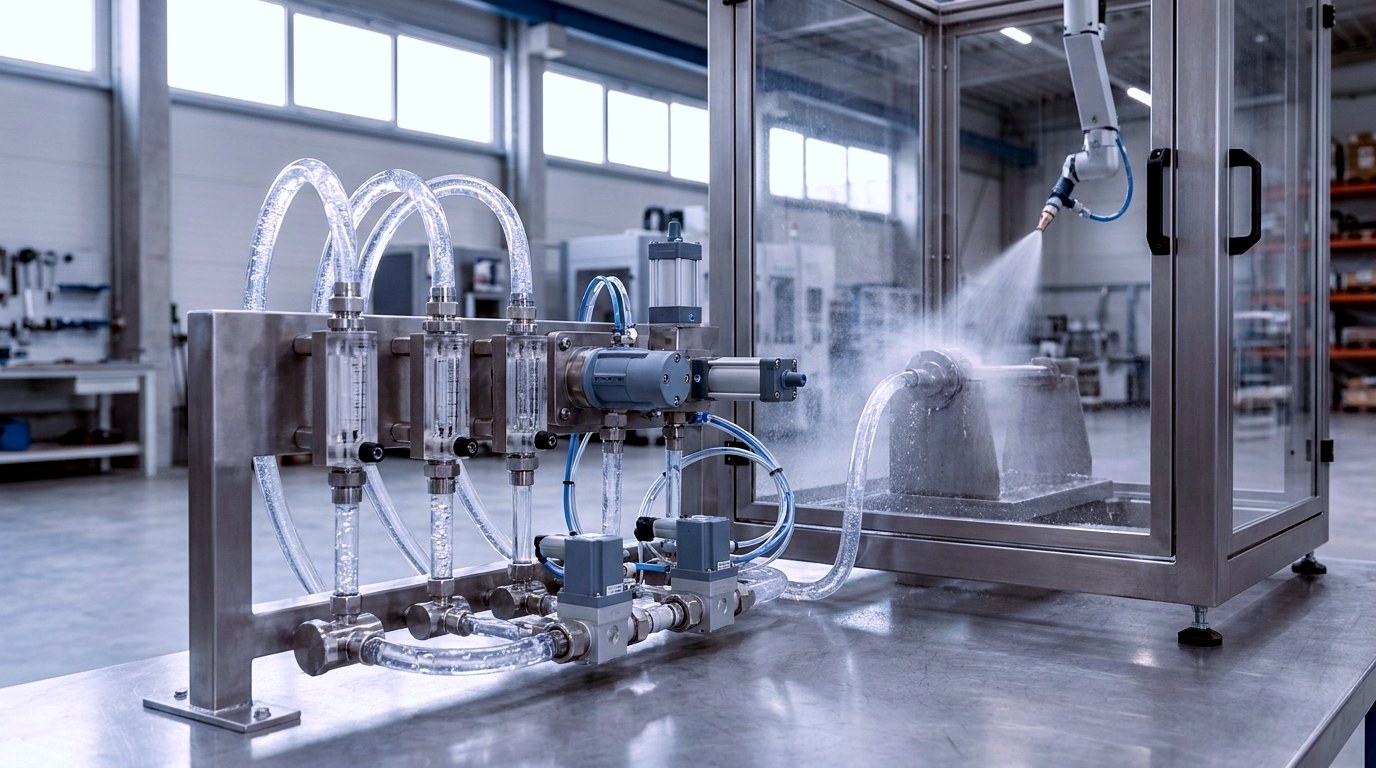
Dosing & cleaning processes
Water and aqueous media for dosing, flushing and cleaning tasks with tight, fast switching.

Mechanical & plant engineering
Reliable switching at high frequencies and varying pressure conditions in mechanical engineering.
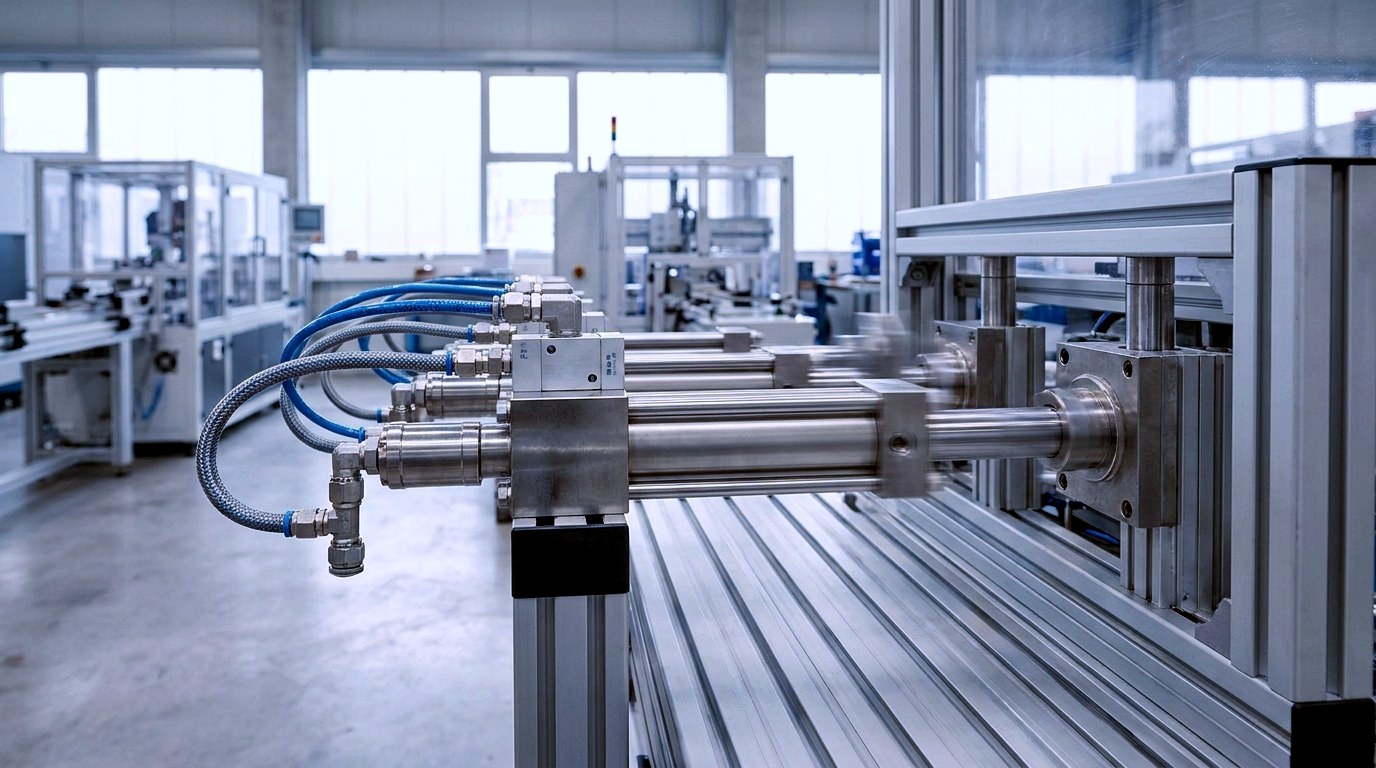
Test & cycling applications
Short switching times and long service life for high-demand cycling applications.
Availability & Consultation
Application-Specific Configuration – On Request
Coaxial valves are highly application-specific: bore size, material, seal, and actuation type determine the exact variant. Tell us your medium, pressure and temperature range, and required port connection – we will identify the right variant and check availability.
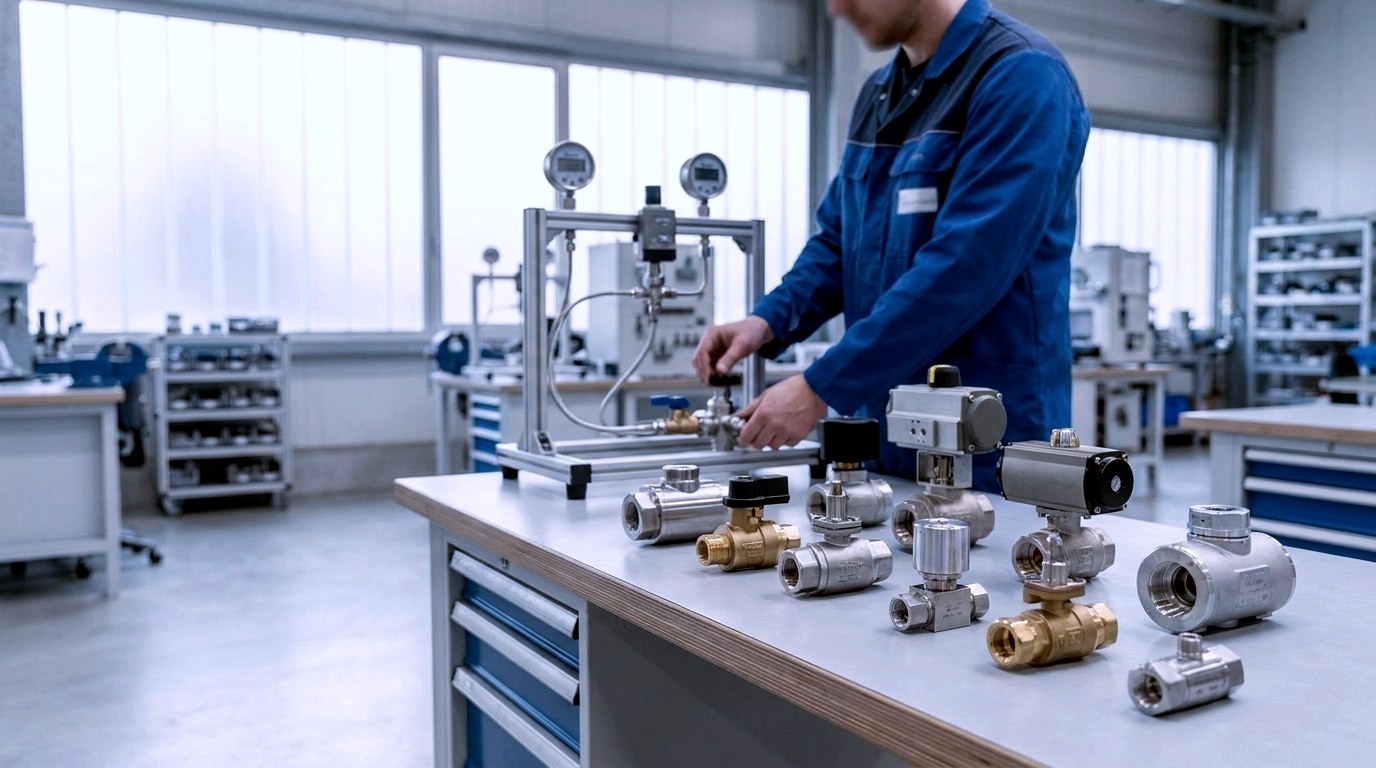
Variants Configurable
Many variants of the CSE01, CVT and CVF series can be configured at short notice; availability and lead time depend on the specific variant and will be confirmed upon request.
Special & Ex-Proof Versions
Special and Ex-proof versions with additional features are coordinated on a project basis depending on the series – we will clarify on request whether an ATEX-rated variant is available.
Engineering Support by the STASTO Team
We work with you to match material selection, seal, and actuation type to your process conditions.
Frequently Asked Questions
Coaxial valves – explained briefly
Answers to the most common questions about function, media and product series.
What is a coaxial valve?
A coaxial valve is a directly operated 2/2-way process valve in which a tubular piston opens and closes coaxially to the media flow. It switches quickly and largely independent of pressure, as no pilot membrane and no minimum pressure differential are required.
How does a coaxial valve differ from a solenoid valve?
Coaxial valves are available both pneumatically actuated (series CSE01) and solenoid-operated as coaxial solenoid valves (series CVT and CVF). Unlike many pilot-operated solenoid valves, they do not require a minimum pressure differential to switch.
Which media are coaxial valves suitable for?
Depending on the material and seal, they are suitable for compressed air, gases, water, and viscous or contaminated media. The specific media approval depends on the particular variant and can be found in the datasheet or clarified on request.
What nominal sizes are available?
The CSE01 series covers smaller port sizes from approximately 3/8" to 1¼", while the solenoid valve series CVT and CVF extend to larger nominal sizes in the range DN10 to DN80. We will match the right size to your required flow rate.
Are coaxial valves available for hazardous areas (Ex)?
Special versions with additional features are available for certain series. Whether an ATEX-rated variant is available for your application is something we are happy to clarify on request.
What do the abbreviations such as AT and ZT mean?
They identify the actuation type within the CSE01 series – for example pneumatically actuated (AT) or spring return (ZT). The exact assignment can be found in the type key or clarified during consultation.
Related Products
Related categories
Complementary fittings and valves from the STASTO range for your process application.
Request now
The right coaxial valve for your process
You know the medium, pressure and port size – we know the CSE01, CVT and CVF series. Send us your requirements and the STASTO Automation team will recommend the right variant along with availability.