



Valves › Valves, Butterfly Valves and Gate Valves – Automated
Pneumatic Pinch Valves – Pinch Valves for Abrasive and Aggressive Media
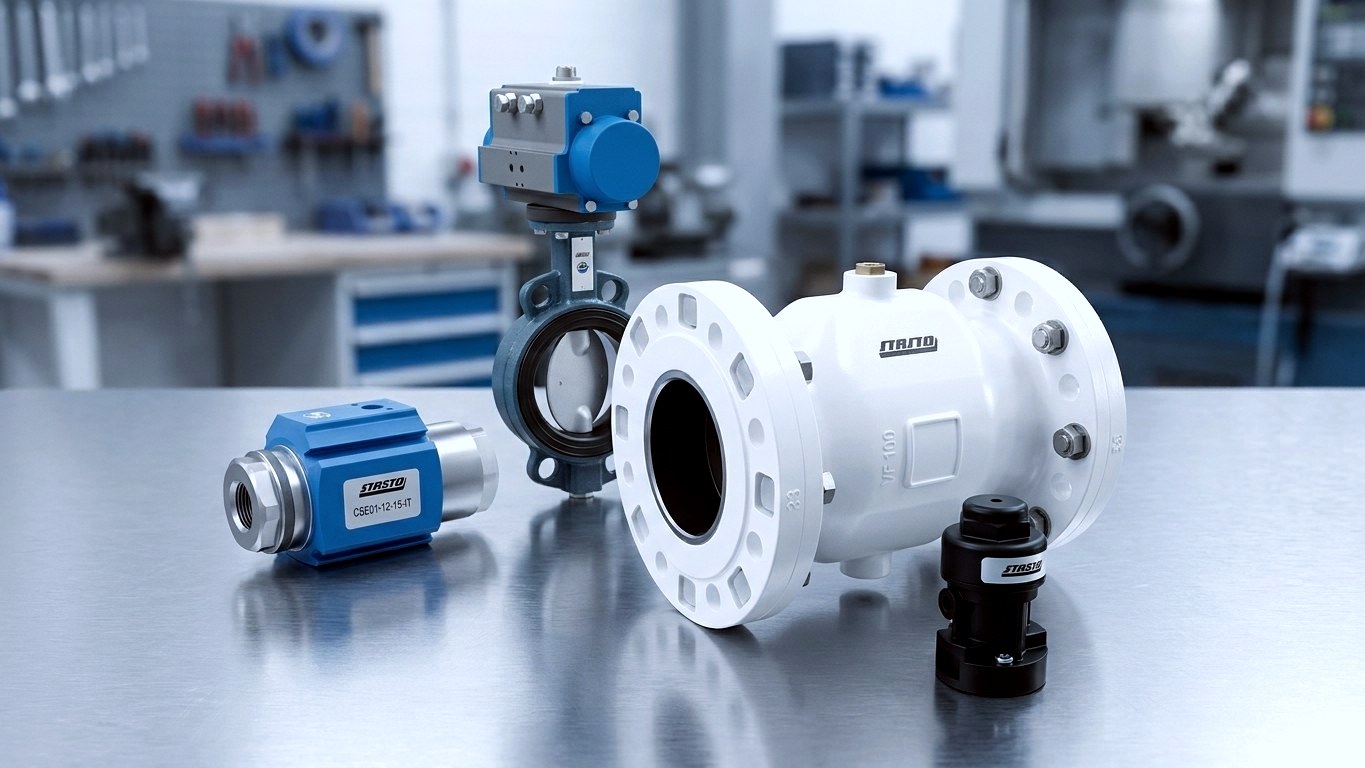
When solids, bulk materials, or aggressive suspensions destroy every valve seat seal within weeks, the pneumatic pinch valve is the structurally correct answer: the medium flows exclusively through an elastic sleeve. There is no seat, no disc, no stem, and no seal in the media flow — shut-off is achieved by the control pressure fully pinching the sleeve closed. Wear is thus concentrated on a single, easily replaceable component. STASTO offers pneumatic pinch valves in several series: from the flanged Series PI02 and Series VF in DN 40 to DN 300, through the threaded-connection Series PI08 (G 1", DN 25), to the compact Series PI05/PI06 pinch valves for continuous sleeves. Together with you, we select nominal size, sleeve material, and control unit based on the medium, operating pressure, and cycle requirements — not based on a catalog page.
Sizing by Media & Pressure
Why choose a pinch valve
Four design advantages of pneumatic pinch valves
The hose sleeve handles shut-off and media containment at the same time. This fundamentally changes the wear logic of a shut-off point.
No media contact at seat or actuator
The bore is a smooth hose passage with no dead spaces, edges, or sealing seats. Abrasive particles, fibers, and solids pass through the valve without contacting any function-critical metal surfaces. When wear occurs, only the hose sleeve is replaced — not the valve body.
Full-bore, unobstructed flow path
When open, the bore matches the hose's inner diameter — virtually no cross-section restriction, low pressure drop, and no pockets for buildup. That's why pinch valves are preferred over conventional shut-off valves for suspensions, slurries, and powders.
NC or NO — matched to your safety logic
Series PI03 is designed as NC (normally closed, fail-safe), Series PI04 as NO. For the continuous-sleeve variants, PI05 = NC and PI06 = NO. The flanged series PI02, PI12, and VF operate with direct pilot pressure: control pressure 1.8 to 2.5 bar above the actual operating pressure.
Material and hygiene variants — straight from the catalog
Hose sleeves available in natural rubber, food-grade natural rubber, FDA-approved natural rubber (Series PI02-WRA), food-grade EPDM, food-grade EPDM-HTEC, and food-grade NBR. Media-wetted connection parts on Series PI03/PI04 in 1.4435; Series PI08 in stainless steel.
Fundamentals
Operating Principle, Designs and Selection Criteria Explained
Sizing a pinch valve means deciding on three things: connection type, actuation logic, and sleeve material. The sections below summarize what matters most.
How a Pneumatic Pinch Valve Works
- Shut-off Principle
- Control pressure acts from outside on the elastic sleeve and pinches it completely shut. There is no sealing surface in the media flow path.
- Directly Actuated
- In the flanged series PI02, PI12 and VF, control pressure acts directly on the sleeve: 1.8 to 2.5 bar above the actual operating pressure.
- With Actuator
- Series PI03 (NC) and Series PI04 (NO) feature an 80 mm actuator diameter; control pressure for PI03 is 4.4–10 bar, for PI04 per the diagram in the datasheet.
- Wear Part
- The sleeve is the defined wear part and can be ordered separately — the valve body itself remains in service.
Connection Types in the Range
- Flange PN 10/16
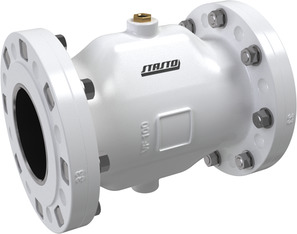
- Series PI02 (DN 40–300) and Series VF (DN 40–250) feature an aluminum body and aluminum flange, VF with a steel liner, PI02 optionally with a stainless steel liner.
- Flange to DIN 28459
- Series PI12 in DN 100, installation length 280 mm, pilot port 1/4" — when the connection dimensions are specified.
- G 1" thread
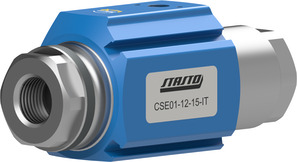
- Series PI08 with internal thread G 1", DN 25, stainless steel connection part, installation length 120 mm, pilot port 1/8".
- Rp 1" hygienic
- Series PI03 and PI04 with connection parts made of 1.4435, DN 25, for hygienically demanding small nominal sizes.
- Continuous sleeve
- Series PI05/PI06 with polyamide housing clamps the continuous sleeve from the outside, pilot port M5.
Choosing sleeve materials
- Natural rubber
- Standard material for abrasive media, bulk solids and slurries in the flanged series.
- Natural rubber, food-grade / FDA
- For hygienic applications; the FDA-approved version is the PI02-WRA series with aluminum flange and stainless steel bushing.
- EPDM food-grade
- In series PI03/PI04 for -30…+95 °C; available as EPDM-HTEC food-grade up to +90 °C.
- NBR food-grade
- In series PI03/PI04 for -20…+80 °C, depending on media compatibility.
Series Comparison
PI02, VF, PI03/PI04, PI08 and PI05/PI06 Compared Directly
The series differ in connection, nominal size and switching logic. The table provides an overview of the specifications from the product descriptions.
| PI02 | VF | PI03 / PI04 | PI08 | PI05 / PI06 | |
|---|---|---|---|---|---|
| Connection | Flange PN 10/16 | Flange PN 10/16 | Rp 1" | Internal thread G 1" | Continuous hose, polyamide housing |
| Nominal size | DN 40–300 | DN 40–250 | DN 25 | DN 25 | for continuous hoses |
| Switching logic | directly actuated | directly actuated | PI03 = NC, PI04 = NO | directly actuated | PI05 = NC, PI06 = NO |
| Operating pressure | 0–6 bar (variant-dependent 0–5.5 bar) | 0–6 bar | 0–6 bar | 0–5.5 bar | Control pressure 1–6 bar |
| Medium temperature | -10…+80 °C | -10…+80 °C | EPDM -30…+95 °C, NBR -20…+80 °C | -10…+80 °C | -30…+100 °C |
| Pilot connection | 1/4" | 1/4" | Actuator 80 mm | 1/8" | M5 |
| Matching solenoid valve | on request | ABS33 | ABS31 | ABS33 | on request |
Series Overview
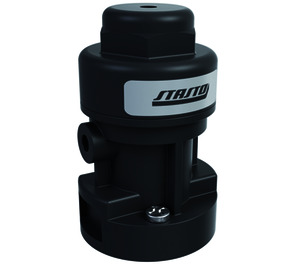
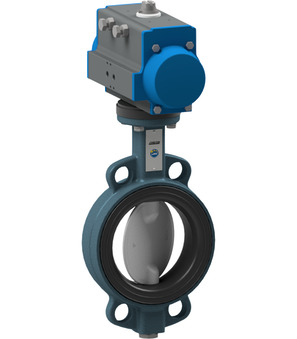
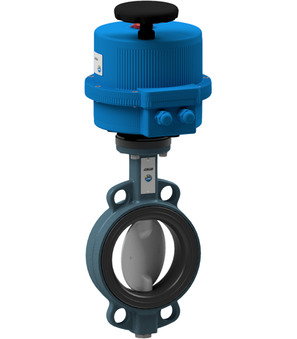
Pneumatic pinch valves at the STASTO shop
Each product line leads to the matching subcategory with items, face-to-face lengths and datasheets.
Applications
Where pneumatic pinch valves play to their strengths
Wherever solids, fibers, or aggressive media wear out conventional shut-off valves.
Abrasive Media and Slurries
Sand, gravel, lime slurry, cement slurry, fly ash, ore suspensions: the solid material flows through the elastomer sleeve, not over a metallic sealing edge. Natural rubber sleeves are the standard material here.
Bulk Solids and Powders
Metering and shut-off points beneath silos, rotary valves, and pneumatic conveying lines. The full, smooth bore prevents bridging and buildup; when closed, the sleeve pinches shut dry.
Food, Beverage, and Pharma Auxiliary Processes
For applications requiring hygiene documentation, FDA-approved natural rubber (PI02-WRA), food-grade natural rubber (VF), food-grade EPDM, and food-grade EPDM-HTEC (up to +90 °C) are available. We indicate which approval your variant carries with the quotation.
Aggressive and Contaminated Liquids
Neutralizing agents, lime and precipitation reagents, wastewater with solid content. The critical factor is the sleeve/media material pairing — we cross-check this against the datasheet before confirmation.
Metering and Cyclic Operation
Short switching times with mounted control valve ABS31/ABS33, coil BDA, and connector C003 (optionally with LED and VDR). For high cycle counts, plan the sleeve as a wear part.
Laboratory Systems and Small Volumes
Series PI05/PI06 clamps continuous tubing from the outside without interrupting the fluid path — polyamide body, M5 pilot port, media temperature -30…+100 °C.
Sourcing without detours
Availability, assembly and documentation
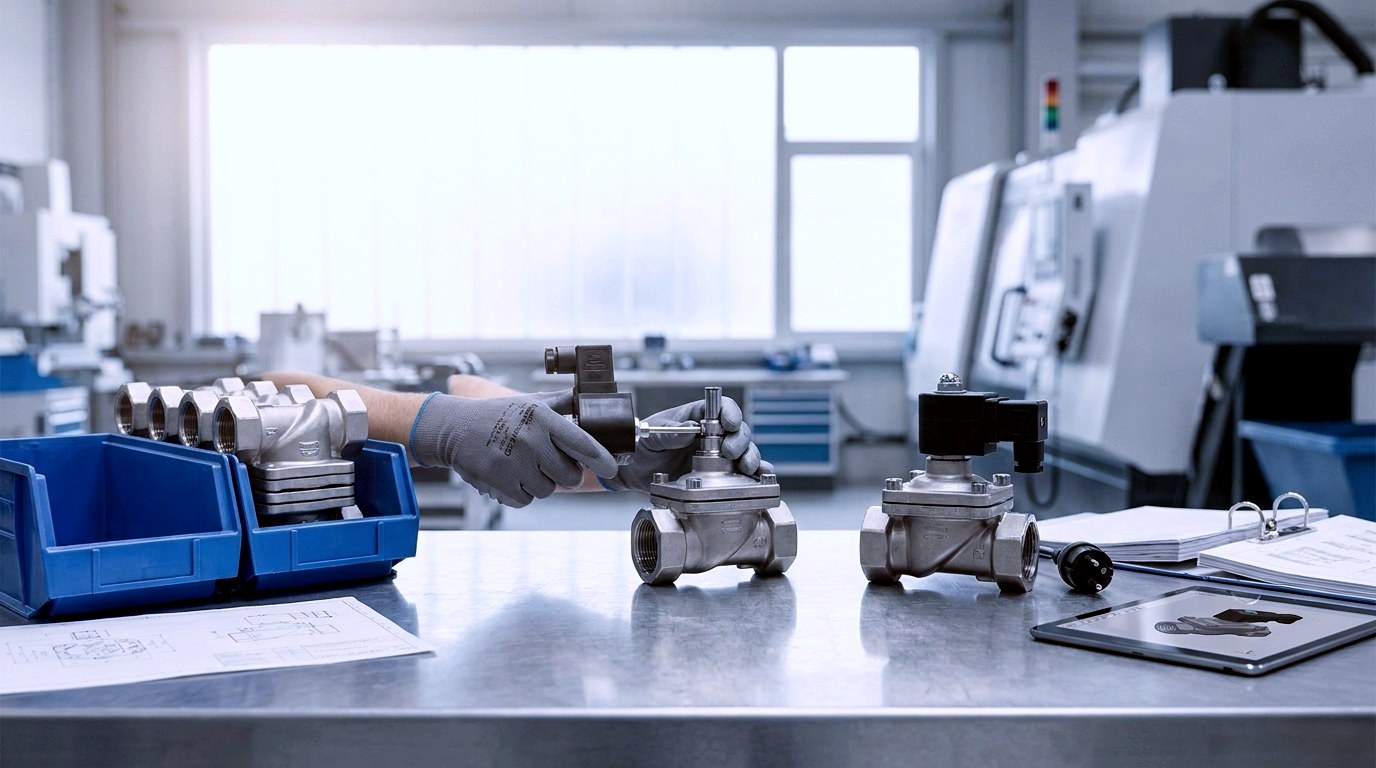
From standard nominal sizes to fully assembled valves with pilot valve, solenoid coil and connector.
Availability
Common nominal sizes and standard sleeve materials are stocked or available at short notice — you'll find the binding availability and lead time for each variant on the product page or with your quote. Special materials and special sizes on request.
Fully assembled
We supply pilot valves of the ABS series pre-assembled: ABS33 fits Series PI08 and Series VF, ABS31 fits Series PI03 and Series PI04 — each with a 3/2-way solenoid valve and silencer. Also available: BDA-type solenoid coils (incl. 24 V DC or 220–230 V/50–60 Hz) and connectors to Series C003.
Hazardous area & spare parts
ATEX-marked coil versions can be provided on request depending on series and variant; please specify zone, equipment group and temperature class. Sleeves are available separately — on request we can store the assignment in your customer account.
Documentation
Datasheets with face-to-face lengths, pilot pressure/operating pressure diagrams and dimensional drawings for every series; material and approval certificates available on request per variant.
Process
Three steps to the right pinch valve
We size the valve based on media, operating pressure, and duty cycle — not by catalog page.
Clarify medium and operating data
Medium, solids content, operating pressure, temperature, and nominal size determine the series and sleeve material. For hygienic applications, please specify the required approval.
Determine series and switching logic
Flange (PI02, VF, PI12), threaded (PI08), hygienic small nominal size (PI03/PI04), or continuous sleeve (PI05/PI06) — plus NC or NO according to your safety logic.
Add control components and order
On request, fully assembled with control valve ABS31/ABS33, solenoid coil BDA, and connector C003. We also plan sleeve inserts as spare parts right from the start.
Frequently Asked Questions
Pneumatic Pinch Valves – FAQ
Answers on operating principle, differentiation and selection.
How does a pneumatic pinch valve work?
A pneumatic pinch valve shuts off by using control pressure to fully squeeze an elastomeric sleeve from the outside. The medium never contacts a seat, plug, spindle or seal — it flows solely through the sleeve. On the directly actuated flanged series PI02, PI12 and VF, control pressure runs 1.8 to 2.5 bar above the actual operating pressure.
What's the difference between a pneumatic and an electric pinch valve?
Pneumatic pinch valves are actuated by control pressure, electric versions by an electric actuator. In this series STASTO supplies pneumatic versions exclusively; electric control is handled via an upstream 3/2-way solenoid valve from the ABS series with a type BDA coil.
Why are pinch valves suited to abrasive media?
Because there's no metallic sealing edge in the media path: sand, gravel, slurry or fly ash only pass through the elastomer sleeve. Wear is concentrated on the sleeve insert, which is orderable separately and replaceable on a defined schedule — the valve body itself stays in service.
What do NC and NO mean on a pinch valve?
NC (normally closed) means closed when de-energized, NO (normally open) means open when de-energized. Series PI03 is NC, series PI04 is NO; for the full-sleeve variants, PI05 = NC and PI06 = NO.
Which nominal sizes are available?
The flanged series PI02 covers DN 40 to DN 300, series VF DN 40 to DN 250. Series PI08 (G 1") and series PI03/PI04 (Rp 1") work in DN 25, series PI12 in DN 100 with a flange to DIN 28459.
Are pinch valves available for food applications?
Yes — Series PI02-WRA is fitted with an FDA-approved natural rubber sleeve. In addition, food-grade natural rubber (including Series VF), food-grade EPDM, food-grade EPDM-HTEC, and food-grade NBR are available. We indicate the specific approval for your variant in the quotation.
Can I order a pinch valve complete with control unit?
Yes, we supply Series ABS control valves pre-mounted: ABS33 for Series PI08 and VF, ABS31 for Series PI03 and PI04 — with a 3/2-way solenoid valve and silencer, coil type BDA (e.g. 24 V DC or 220–230 V/50–60 Hz), and Series C003 connector socket.
Are ATEX versions available?
Versions with ATEX-marked coils can be provided on request, depending on the series and variant. Please specify zone, equipment group, and temperature class with your inquiry — we will check the combination before confirming.
Goes well with this
Complementary series and accessories
Control valves, solenoid coils, and further pinch valve designs for the complete shut-off point.
Next Step
Sizing a Pinch Valve by Medium, Pressure and Cycle
Tell us the medium, solids content, operating pressure, temperature and nominal size — we'll recommend the series, sleeve material and control.