



Pneumatic Directional Control Valves
Directional Control Valves for Pneumatics – Types, Designs and Selection Guide
Directional control valves determine the flow path of compressed air and thereby control the movement of your cylinders, actuators and grippers. At STASTO you will find the full range of switching functions – 3/2, 5/2 and 5/3 – in electrical (solenoid) and pneumatic actuation, with spring return or bistable operation, in standardised ISO and NAMUR configurations.
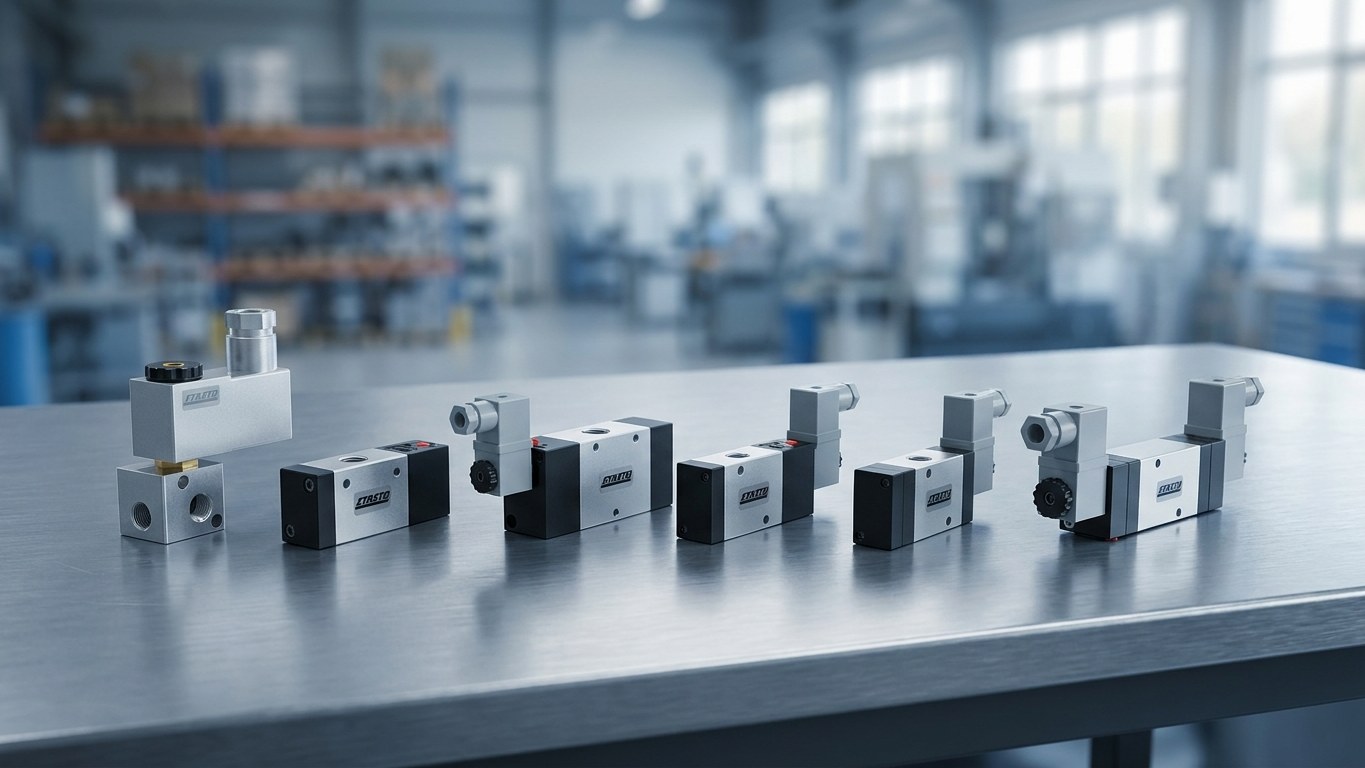
3/2 · 5/2 · 5/3 – ISO & NAMUR
Why STASTO
The right directional control valve – selected fast, delivered fast
Standardised ISO and NAMUR body styles can be directly assembled into valve manifolds or mounted on quarter-turn actuators. Common series are available from stock depending on variant – European-manufactured and backed by technical application support.
Full range of switching functions
3/2, 5/2 and 5/3, complemented by mechanically/manually actuated variants and special functions – spring return or bistable/pulse-controlled.
Both actuation types
Electrically as solenoid valve (typically 24 V DC / 230 V AC) and pneumatically/pilot-operated, including vacuum applications.
Standardised & combinable
ISO and NAMUR port patterns, connector widths 16 mm (Serie K) and 22 mm (Serie E+V), directly chainable into valve manifolds.
European manufacturing
Short lead times depending on series, EU-wide shipping and technical support from STASTO.
Selection guide
Choosing the Right Directional Control Valve in 3 Steps
Switching function, actuation and design determine the right valve for your cylinder, flow rate and control system.
Step 1 – Select Switching Function
- 3/2
- One working port, switches on/off – for single-acting cylinders, vacuum and blow-off applications.
- 5/2
- Double-acting cylinder with two stable switching positions.
- 5/3
- Additional centre position (closed / pressurised / exhausted) for positioning and safety functions.
- Related Functions
- 2/2, 4/2 and 4/3 as special configurations – available on request.
Step 2 – Select Actuation Type
- Electrical (Solenoid Valve)
- With or without manual override.
- Pneumatic / Air-Piloted
- For control circuits without an electrical signal.
- Mechanical / manual
- For example, cam valves.
- Return method
- Spring return (monostable) holds the default position; pulse-controlled (bistable) retains the last position even without a signal.
Step 3 – Select body style & standard
- ISO directional control valves
- For standardised sub-bases and valve manifolds.
- NAMUR mounted valves
- For direct mounting on pneumatic quarter-turn actuators.
- Directly operated vs. pilot operated
- Depending on flow rate and switching capacity.
- Connector width 16/22 mm
- Series K (16 mm) and Series E+V (22 mm) for manifold assembly.
Switching functions compared
3/2 vs. 5/2 vs. 5/3 – which function for which application
The first number indicates the ports, the second the switching positions. Selection depends on the cylinder type and the required centre position.
| 3/2 | 5/2 | 5/3 | |
|---|---|---|---|
| Ports / Positions | 3 ports, 2 positions | 5 ports, 2 positions | 5 ports, 3 positions |
| Typical actuator | Single-acting cylinder, vacuum, blow-off | Double-acting cylinder | Double-acting cylinder with mid position |
| Mid position | no | no | blocked / pressurised / exhausted |
| Primary application | On/off control, suction cups | Two stable end positions | Positioning and safety functions |
Product Range
Directional Control Valve Categories
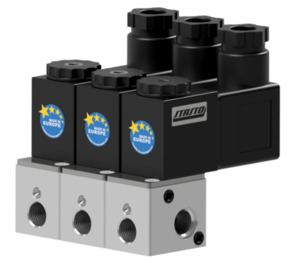
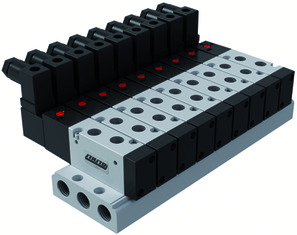
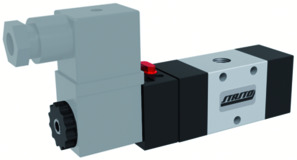
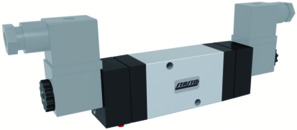
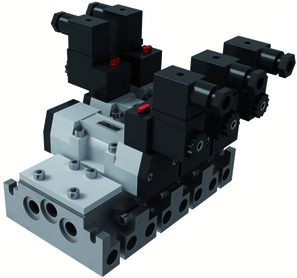
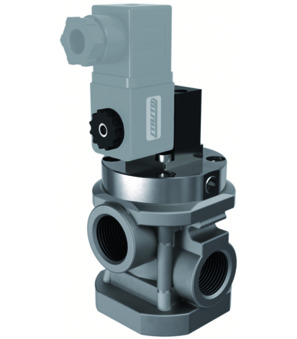
From direct-acting compact valves to chainable series K and E+V, through to standardised ISO and NAMUR designs.
Applications
Directional control valves in use
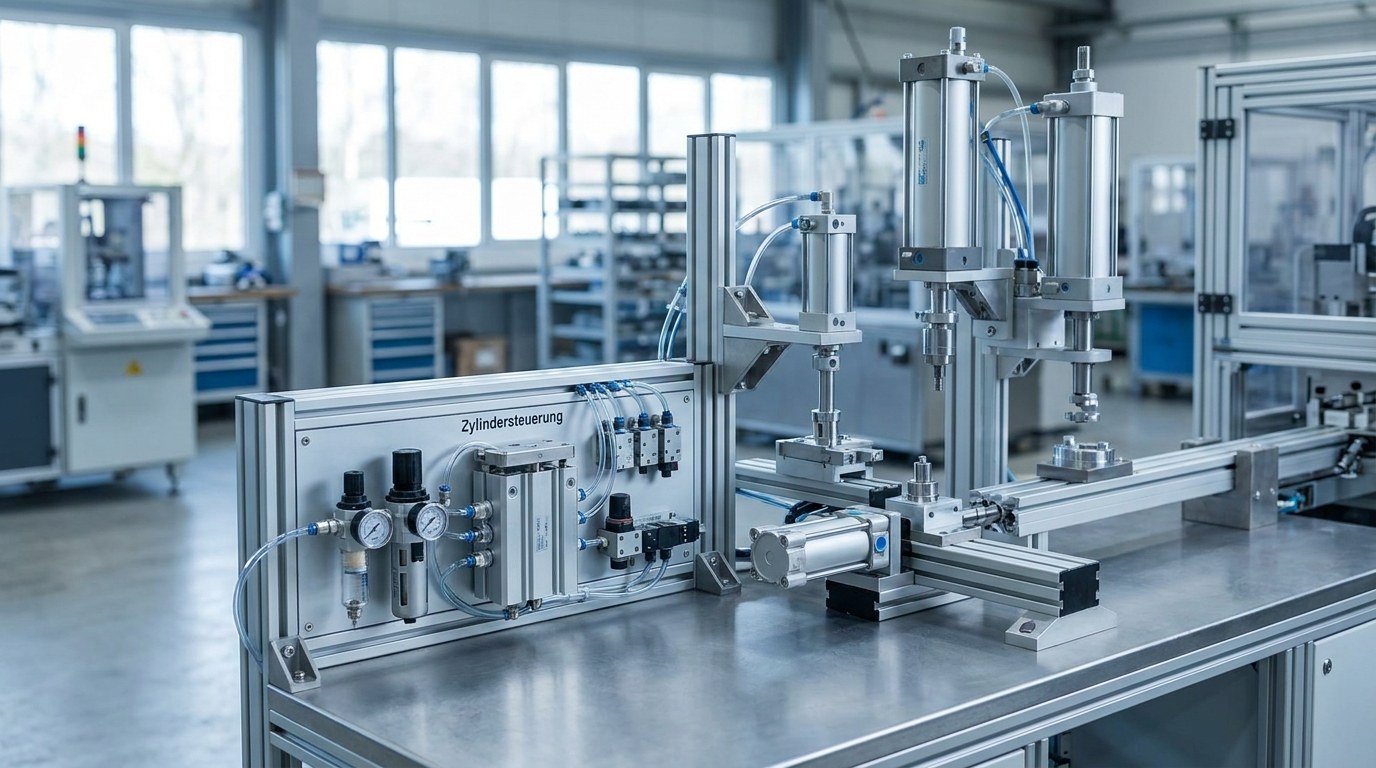
From cylinder control and valve automation to vacuum handling.
Cylinder Control
Control of single- and double-acting cylinders in assembly and handling automation.
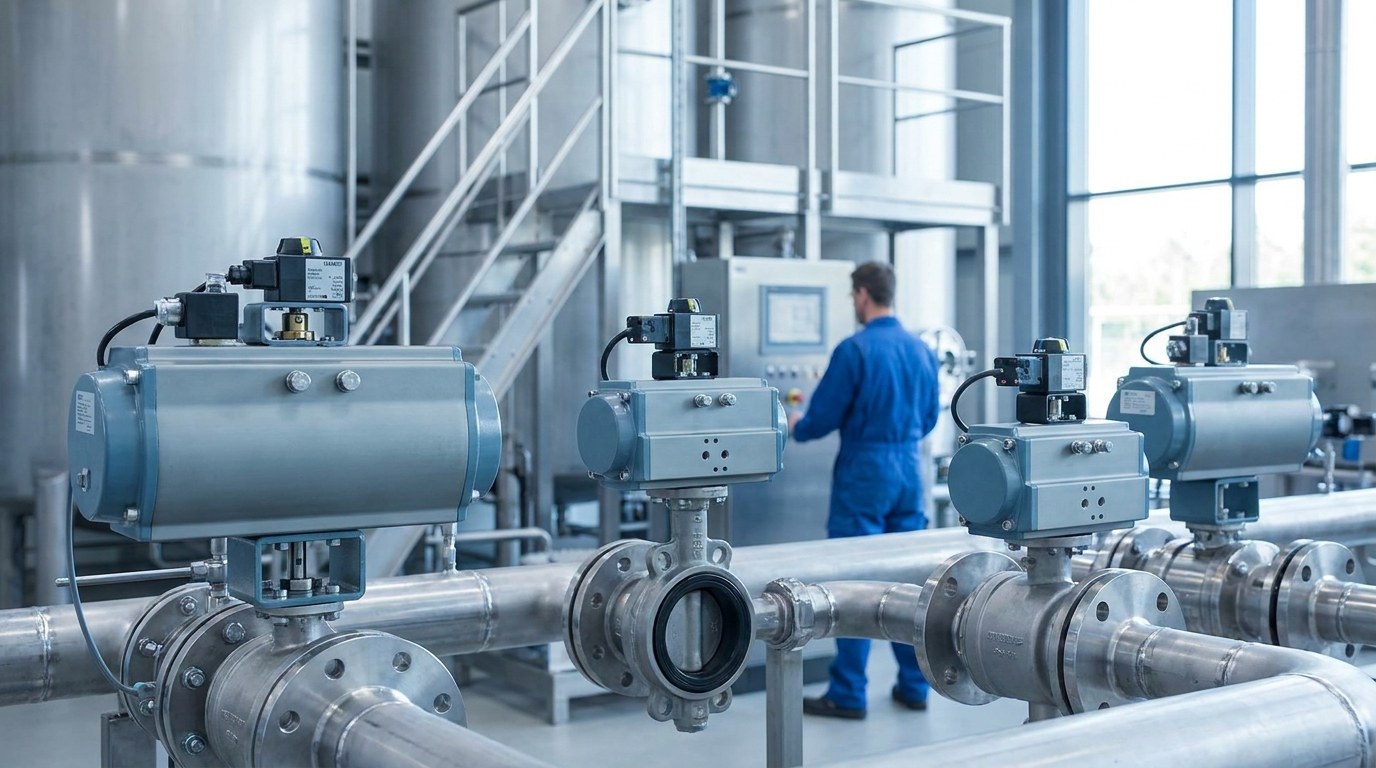
Valve Automation
NAMUR valves on pneumatic rotary actuators – the interface to butterfly valves and ball valves.

Vacuum Handling
Suction cups with 3/2 air/vacuum valves for material handling applications.
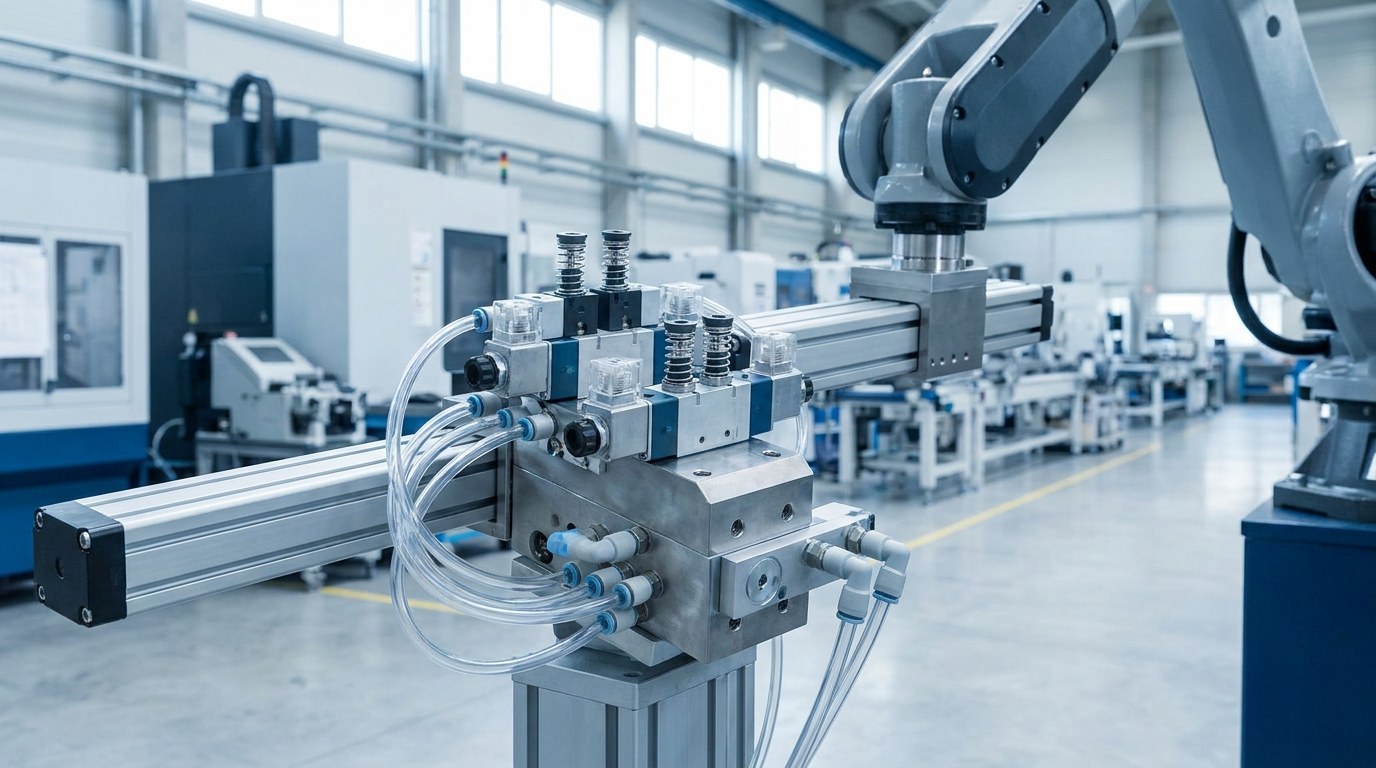
Hold & Safety Functions
Defined mid-position via 5/3 valves for positioning and safety functions.
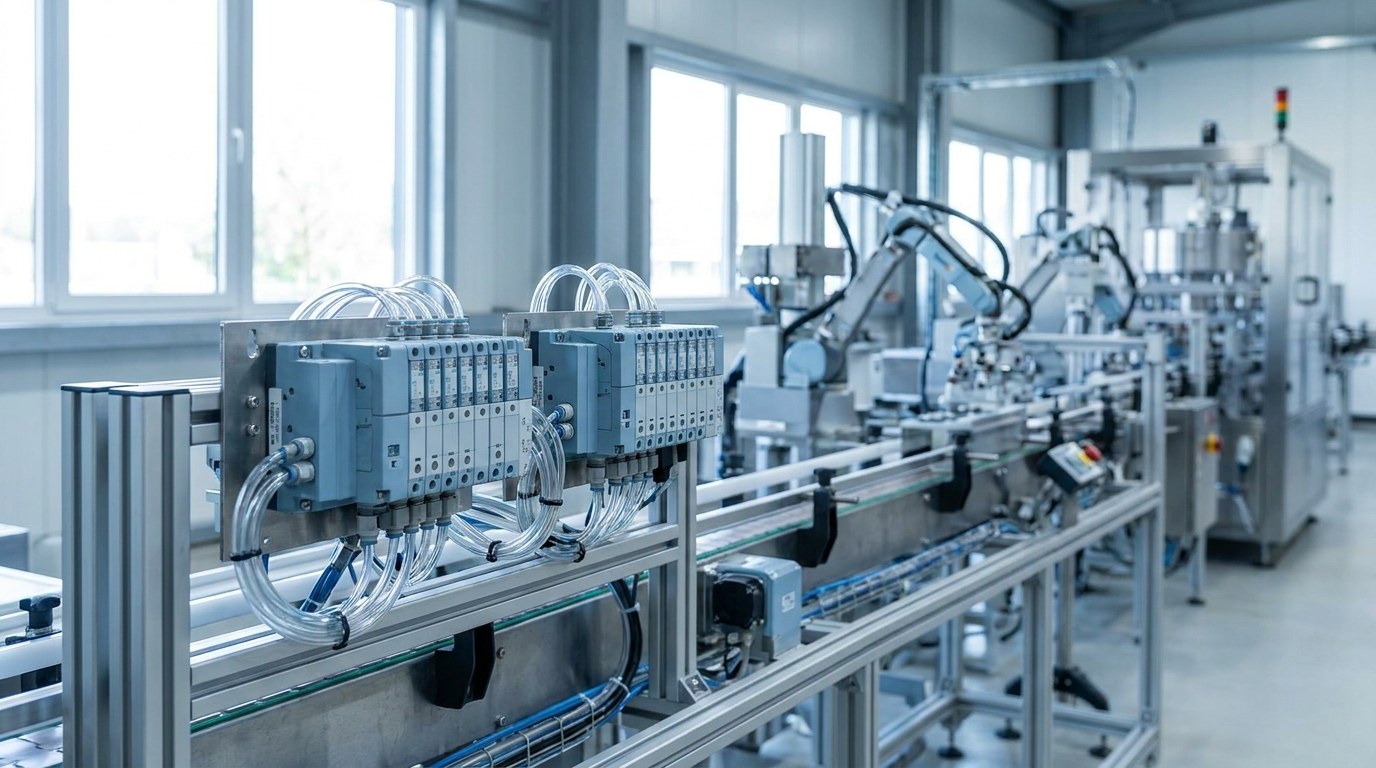
Packaging & Filling Technology
High-speed switching cycles with linked valve islands from the K and E+V series.
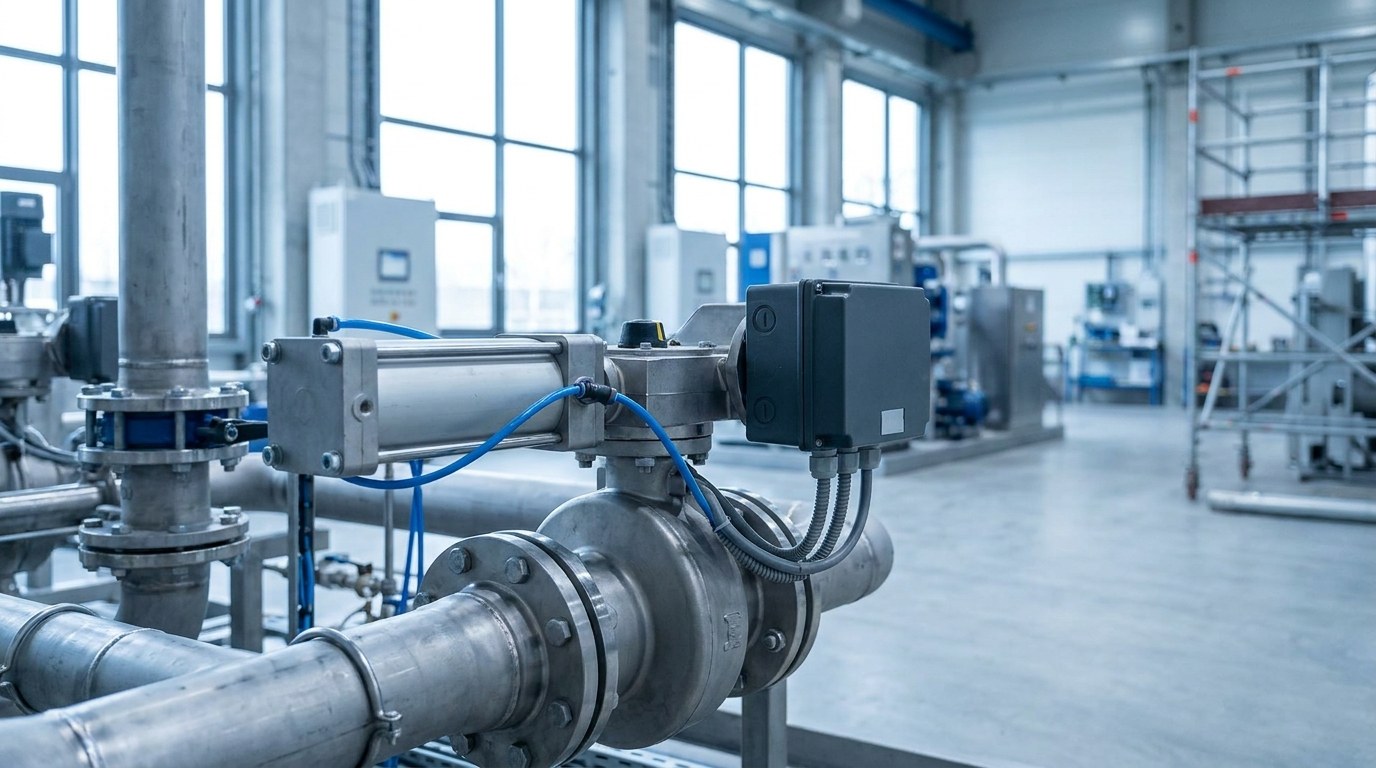
Process Valve Control
Pneumatic and electric actuation of process valves in demanding environments.
Logistics & Made in Europe
Availability, Delivery and Supply Security
One contact for selection, accessories and spare parts – with reliable lead times and EU-wide shipping.

Ex-Stock Availability
Popular series – including Serie K3.W and ISO series PS110/PS111/PS112 – are available ex stock depending on variant, for reliable scheduling and less downtime.
EU-Wide Delivery
Reliable lead times and a dedicated contact for selection, accessories and spare parts.
European Manufacturing & Quality
Manufacturing and quality assurance in Europe – a strong argument for supply security and conformity.
Frequently Asked Questions
FAQ – Directional Control Valves
Answers on switching functions, actuation, standards and delivery.
What do 3/2, 5/2 and 5/3 mean for directional control valves?
The first number indicates the ports, the second the switching positions. 5/2 therefore means 5 ports and 2 positions. This lets you instantly identify which cylinder type and function a valve is suited for.
When to choose 5/2 instead of 5/3?
Choose 5/2 for two stable end positions, and 5/3 when a defined centre position is required. The centre position can be blocked, pressurised or exhausted – important for positioning and safety functions.
Electrically or pneumatically actuated directional valve – which should I choose?
The choice depends on the available control signal, the energy concept and the operating conditions. If no electrical signal is available or electrical systems are critical on site, pneumatic actuation is the right choice; otherwise a solenoid valve is the standard solution.
What is a spring return?
A spring return brings the valve back to its defined rest position without a signal (monostable). In contrast, a bistable (impulse-controlled) valve retains its last switched position even when no signal is applied.
What is a NAMUR valve?
A NAMUR valve is a directional control valve with a standardised port pattern for direct mounting on pneumatic part-turn actuators. This eliminates additional pipework in valve automation applications.
Is a solenoid valve the same as a directional control valve?
A solenoid valve is an electrically actuated directional control valve – the same component type, named after its actuation method. Anyone looking for a 3/2 or 5/2 solenoid valve will find it in the directional control valve range.
How quickly does STASTO deliver?
Common series are available from stock depending on the variant and are shipped throughout the EU. Manufacturing takes place in Europe – for exact lead times, please enquire about the specific series.
Related Products
Wegeventil-Typen im Detail
Complementary valve types and components for pneumatic control systems.
Expert advice
Not sure which directional control valve is right?
STASTO selects switching function, actuation and design to match your cylinder, flow rate and control system – European manufacture, ex stock.